A Guide to Manage Dry Leaves within your premises through mulching
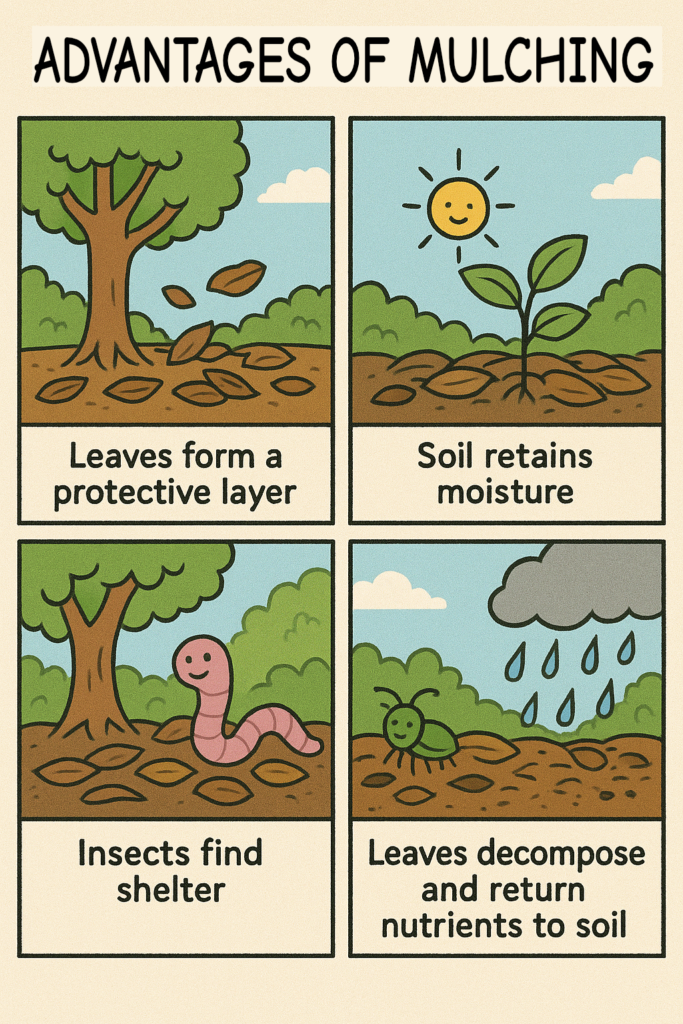
निसर्गात जिथे लुडबूड करायला आपण नाही, अशा ठिकाणी झाडाची पाने गळतात, त्यांचा थर झाडाभोवती मातीवर तयार होतो. ह्या थरामुळे उन्हाळ्यातला तीव्र सूर्यप्रकाश मातीपर्यन्त पोहोचत नाही. मातीत ओलावा टिकून राहतो. विविध कीटकांना त्या थराखाली आश्रय मिळतो.
पावसाळा सुरू झाला की पाने कुजतात आणि त्यातली पोषणद्रव्ये परत मातीला मिळतात. ही निसर्गातली चक्राकार व्यवस्था आहे.
शहरात अर्थातच पाने जेथे पडतात तेथेच राहू देणे शक्य नाही कारण तेवढी जागाच आपल्याकडे नाही. पण तरीही आपण ही चक्राकार व्यवस्था राबवू शकतो. त्यात थोडा बदल करून.
mulching आपण कसे करू शकतो.
गळलेली पाने घेऊन जेथे आपण रोपे लावली आहेत अशा ठिकाणी ती पाने मातीवर पसरायची, त्यांचा थर निर्माण करायचा. मग ती रोपे मोठ्या बागेत, वाफयांत असतील, गच्चीवरच्या बागेत असतील, बाल्कनीतल्या बागेत असतील अथवा खिडकीत ठेवलेल्या दोन-चार कुंड्या असतील.
जिथे माती आहे तिथे आपण mulching करू शकतो. किंबहुना नियम असा आहे की माती कायम झाकलेली पाहिजे, गवत आणि वेलीच्या थराने किंवा वाळलेल्या पानांच्या थराने.
mulching चे फायदे अनेक आहेत. आवरातली बरीच पाने त्यात सामावली जातील हा फायदा आहेच. ह्या थरामुळे मातीत ओलावा टिकून राहतो जो झाडाच्या मुळांच्या वाढीसाठी गरजेचा असतो. पाण्याचीही बचत होते.
कुंडीतल्या रोपाला आपण पाणी घालतो तेव्हा खालून मातकट पाणी वाहून जाते. म्हणजे प्रत्येक वेळी आपण पाणी घालतो तेव्हा माती आणि पोषणद्रव्ये निघून जातात.
mulching च्या थरामुळे पाणी वेगाने कुंडीत न जाता हळूहळू झिरपते, त्यामुळे मातीची धूप होत नाही.
अशा तऱ्हेने निसर्गाचे चक्र आपण शहरात पूर्ण करून पानांचा कचरा होणे टाळू शकतो.
In a natural landscape, when leaves fall, they don’t become “waste.”
They form a soft layer over the soil — protecting it from harsh summer heat, retaining moisture, and providing shelter for countless insects and organisms.
By the time the monsoon arrives, these leaves have slowly decomposed and returned their nutrients to the soil.
That’s nature’s circular system at work — no landfill, no burning, no waste.
In cities, we can close this same loop through mulching. Of course, in the city, we cannot have leaves remain where they fall. There is simply no space.
In the city, we can achieve the same result through mulching, albeit with a few modifications. Take leaves, spread them in a thin layer over the soil wherever we have plants, be it plant beds, pots.
We can do mulching no matter the size of the garden, be it a large garden, a terrace garden, a balcony garden, or a few pots on the windowsill.
Rule of thumb is that soil should always be covered with mulch, it could be green mulch like grasses and creepers or brown mulch with dry leaves.
Mulching reduces evaporation and helps soil retain moisture which the plant roots need for growth.
Mulching layer breaks the speed of water and prevents soil erosion. When you water a pot, you can see muddy water flowing out from beneath, carrying away soil and nutrients. With mulching, water gradually percolates, retaining soil and nutrients.
Thus, mulching protects soil health and conserves water. When the mulching layer decomposes, the soil receives a dose of nutrients.
Complete the circle with mulching.
A small shift in how we look at leaves can make a big difference in how sustainable our cities become.
HOW TO MULCH
mulching आपण कसे करू शकतो.
गळलेली पाने घेऊन जेथे आपण रोपे लावली आहेत अशा ठिकाणी ती पाने मातीवर पसरायची, त्यांचा थर निर्माण करायचा. मग ती रोपे मोठ्या बागेत, वाफयांत असतील, गच्चीवरच्या बागेत असतील, बाल्कनीतल्या बागेत असतील अथवा खिडकीत ठेवलेल्या दोन-चार कुंड्या असतील.
जिथे माती आहे तिथे आपण mulching करू शकतो. किंबहुना नियम असा आहे की माती कायम झाकलेली पाहिजे, गवत आणि वेलीच्या थराने किंवा वाळलेल्या पानांच्या थराने.
mulching चे फायदे अनेक आहेत. आवरातली बरीच पाने त्यात सामावली जातील हा फायदा आहेच. ह्या थरामुळे मातीत ओलावा टिकून राहतो जो झाडाच्या मुळांच्या वाढीसाठी गरजेचा असतो. पाण्याचीही बचत होते.
कुंडीतल्या रोपाला आपण पाणी घालतो तेव्हा खालून मातकट पाणी वाहून जाते. म्हणजे प्रत्येक वेळी आपण पाणी घालतो तेव्हा माती आणि पोषणद्रव्ये निघून जातात.
mulching च्या थरामुळे पाणी वेगाने कुंडीत न जाता हळूहळू झिरपते, त्यामुळे मातीची धूप होत नाही.
अशा तऱ्हेने निसर्गाचे चक्र आपण शहरात पूर्ण करून पानांचा कचरा होणे टाळू शकतो.
In cities, we can close this same loop through mulching. Of course, in the city, we cannot have leaves remain where they fall. There is simply no space.
In the city, we can achieve the same result through mulching, albeit with a few modifications. Take leaves, spread them in a thin layer over the soil wherever we have plants, be it plant beds, pots.
We can do mulching no matter the size of the garden, be it a large garden, a terrace garden, a balcony garden, or a few pots on the windowsill.
Rule of thumb is that soil should always be covered with mulch, it could be green mulch like grasses and creepers or brown mulch with dry leaves.
Mulching reduces evaporation and helps soil retain moisture which the plant roots need for growth.
Mulching layer breaks the speed of water and prevents soil erosion. When you water a pot, you can see muddy water flowing out from beneath, carrying away soil and nutrients. With mulching, water gradually percolates, retaining soil and nutrients.
Thus, mulching protects soil health and conserves water. When the mulching layer decomposes, the soil receives a dose of nutrients.
Complete the circle with mulching.
A small shift in how we look at leaves can make a big difference in how sustainable our cities become.
Mulching on the Ground
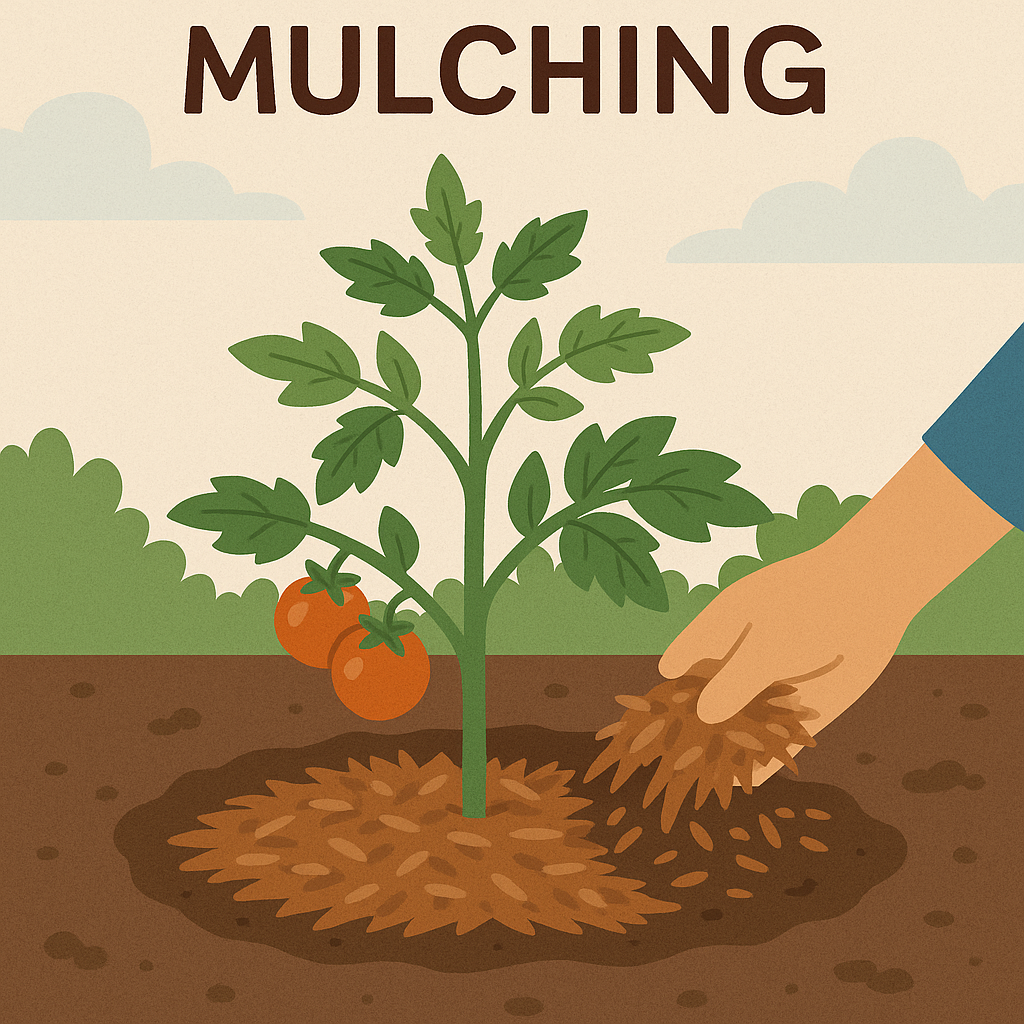
For a garden with plant beds: Take the leaves, crush them if possible or as it is, in a thin layer over the soil, that's it.
Mulching in balcony pots
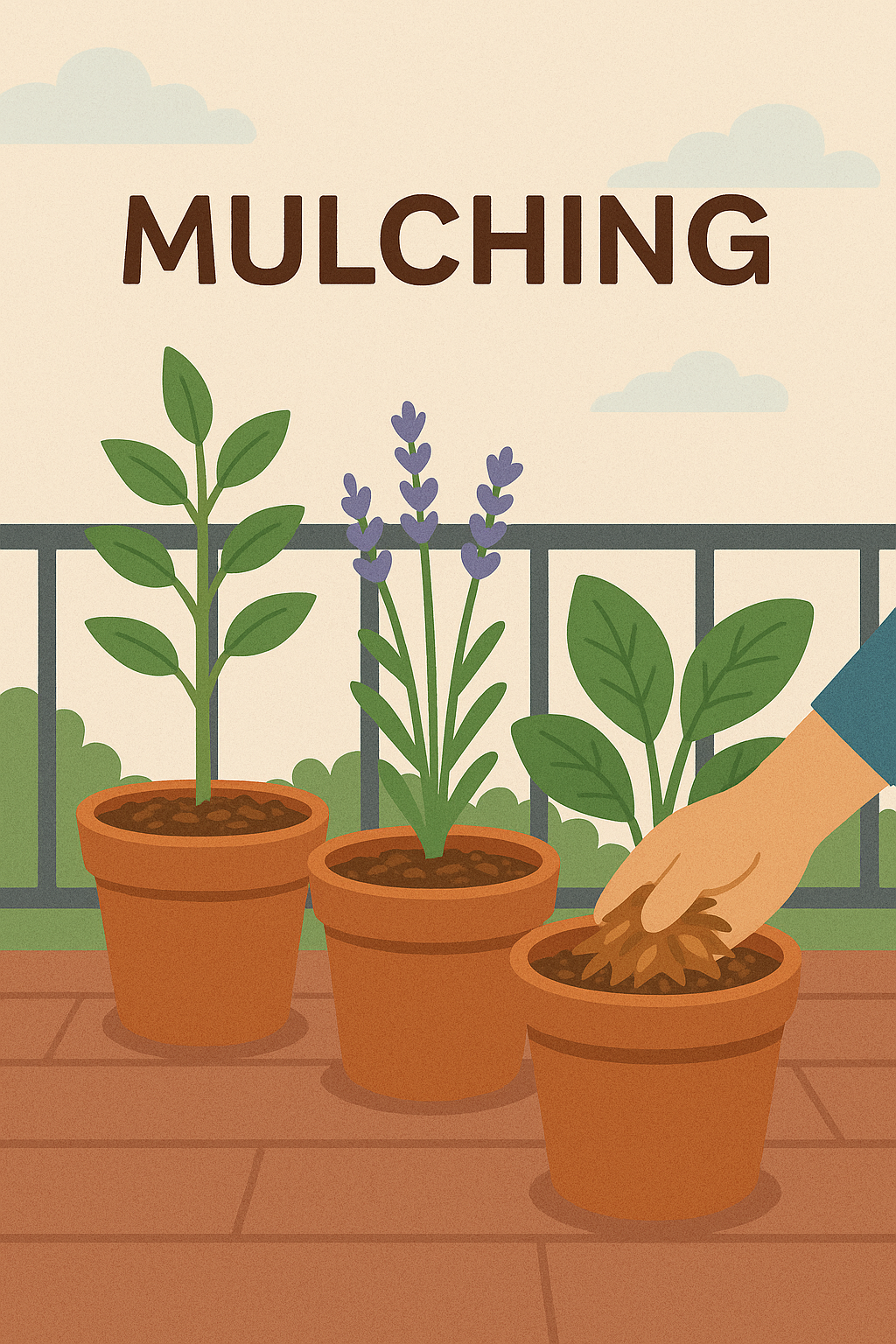
DO you have a balcony garden? Take the leaves, spread them in a thin layer over the soil surface in the pot. That's all.
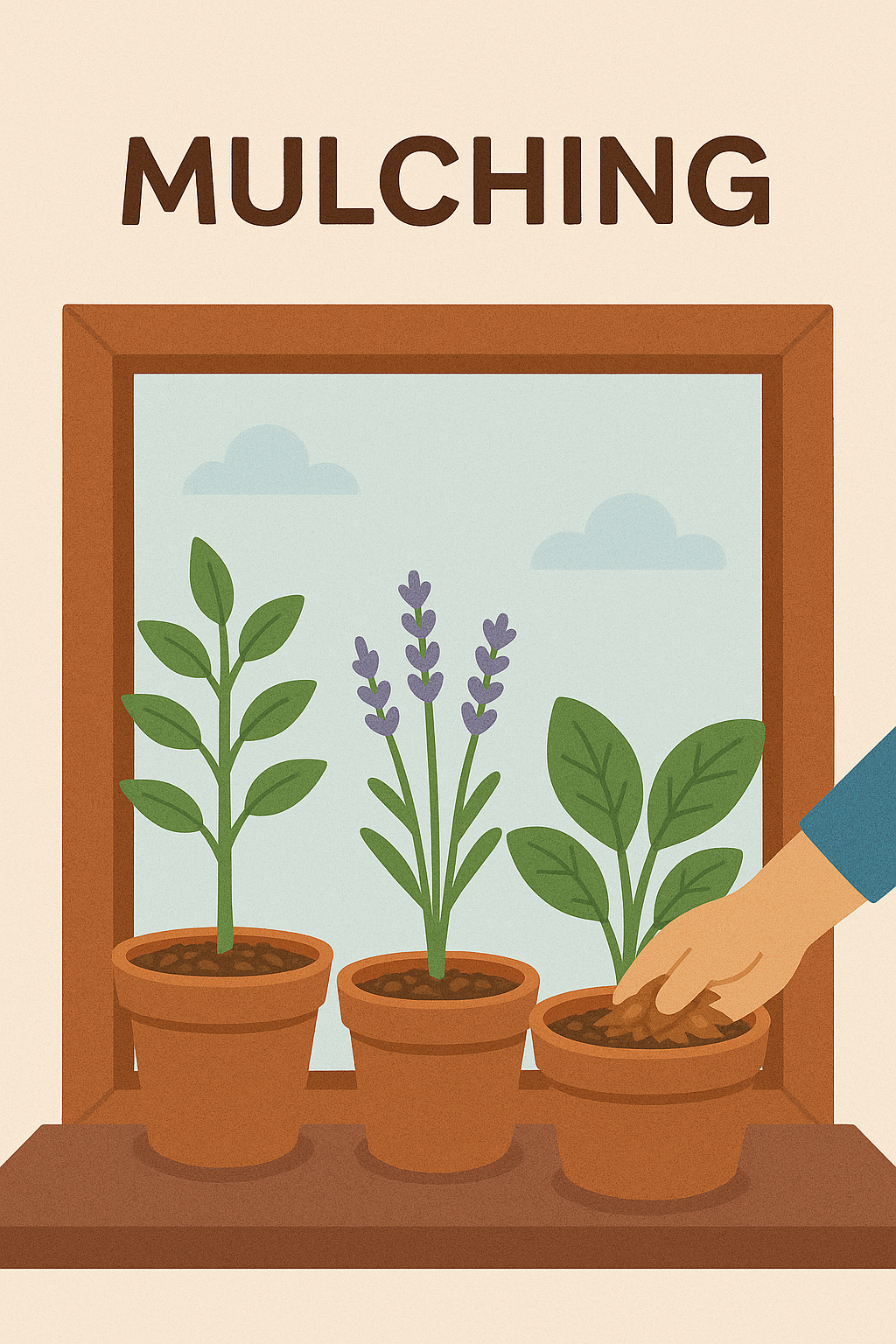
Mulching in the Window Garden
A few pots on the window sill? You can still do mulching in the pots.