वाळलेली पाने परत मातीत गेली पाहिजेत, mulching आणि composting हे दोन मार्ग आहेत निसर्गाची चक्राकार प्रक्रिया शहरात निर्माण करण्यासाठी.
त्याबद्दल आपण सविस्तर चर्चा केली. आता तिसरा पर्याय बघू. तो म्हणजे mulching आणि composting करूनही पाने उरत असतील तर ती ज्यांना mulching व composting साठी पाने हवी आहेत त्यांना देणे, म्हणजे donation.
हे कसे करायचे? ब्राऊन लिफची सुरुवात अशीच झाली. माझ्या घराच्या आवारातल्या वावळच्या पानांचे काय करायचे हा शोध घेताना माझी सुजाता नाफडेशी ओळख झाली. पाने असणाऱ्या लोकांपुढे त्या पानांचे काय करायचे ही समस्या आहे.
तसेच ह्याच शहरात अनेक लोक आहेत जे पानांच्या शोधात आहेत. पाने जरी भरपूर असली तरी कचरा-विरहित पाने मिळणे अवघड आहे. मी पोत्यांत पाने भरली, सुजाता येऊन ती पाने घेऊन गेली. माझ्या आवारातली पाने परत मातीत गेली, पण ती सुजाताच्या बागेत.
पाने जिथे पडतात तिथे ती मातीत जिरणे हे ideal आहे. पण शहरात अशी ideal गोष्ट दरवेळी शक्य नाही. मग पाने जाळण्यापेक्षा ती कुठेतरी मातीत जातील ही व्यवस्था करून आपण निसर्गाची चक्राकार रचना शहरात अमलात आणू शकतो.
ही पाने donate करायची तर दोन मार्ग आहेत. एक म्हणजे आपण आपले ‘taker’ शोधायचे किंवा मग जे त्या taker पर्यन्त पाने पोहोचवतील त्यांची सशुल्क सेवा घ्यायची.
पाने जाळू नयेत तर काय, ते पर्याय सांगणारा हा फ्लोचार्ट.
Dry Leaves Should Return to the Soil — Let’s Bring Nature’s Circular Process Back Into Our Cities
We recently spoke about how mulching and composting are two powerful ways to make dry leaves go back to the soil where they truly belong.
Today, let’s look at a third option — one that is simple, practical, and extremely impactful, Donation.
If you still have extra leaves even after mulching and composting, you can donate them to people who actually need dry leaves for their own gardens, composting units, or farms.
This is exactly how Brown Leaf began.
While searching for a solution for the fallen vaavla leaves in my own home garden, I met Sujata Nafde.
People with lots of leaves struggle because they don’t know what to do with them.
And in the same city, there are many people actively searching for clean, waste-free dry leaves — which are surprisingly difficult to find.
So I collected leaves into gunny bags, and Sujata came to pick them up.
My leaves went back to the soil… not in my compound, but in her garden.
Albeit a modified one, but circle nonetheless.
Ideally, leaves should decompose right where they fall.
But in cities, this is not always possible.
Instead of burning them, if we simply make sure they reach a place where they can turn into soil again, we recreate nature’s circular process — even in the middle of concrete.
There are two ways to donate leaves:
1️⃣ Find your own “taker” who needs dry leaves
2️⃣ Or use a paid service that connects leaf givers and takers
Here’s the flowchart that explains all the alternatives to leaf-burning.
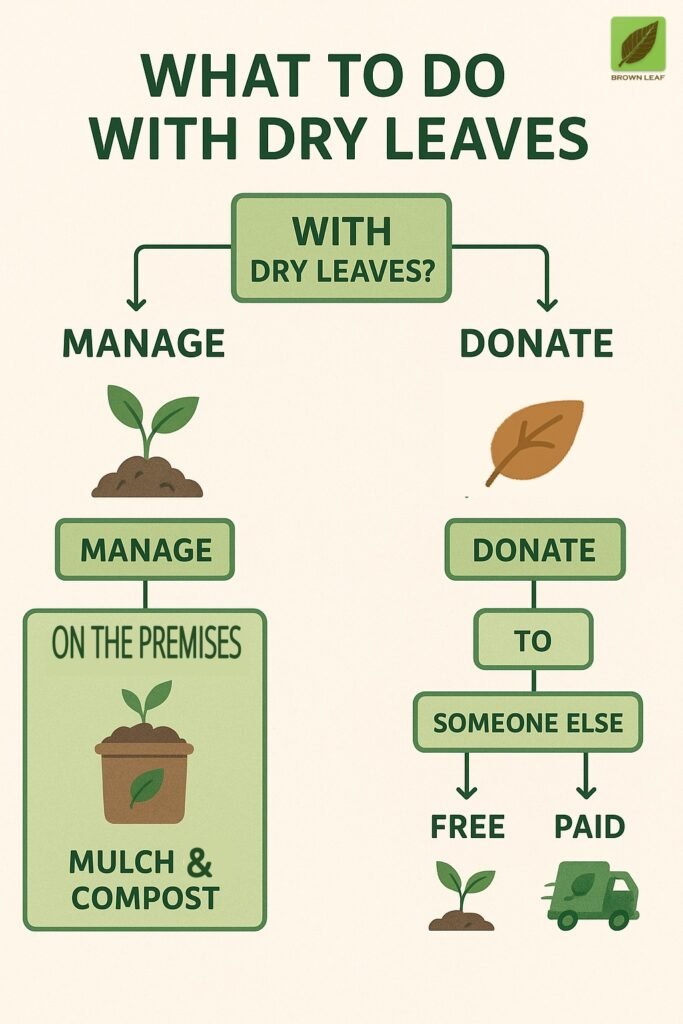
Donation: Free Option, What and How
ही आहे ‘क्ष’ आणि ‘य’ ची गोष्ट..
एक व्यक्ति आहे, त्यांना ‘क्ष’ म्हणूया. त्यांच्याकडे आवारात भरपूर झाडे आहेत. पानगळीच्या काळात मोठ्ठे ढीग साचतात. आवारातला बराचसा भाग पार्किंग, फरशांनी व्यापलेला आहे.
थोडीफार बाग आहे जिथे ‘क्ष’ mulching करतात. कोपऱ्यात जाळीचा पिंजरा उभा केला आहे, त्यात composting करतात. त्यापेक्षा आणखी पाने आवारात सामावणे त्यांना शक्य नाही.
उरलेली पाने जाळली जातात. ‘क्ष’ अस्वस्थ आहेत. पाने जाळायची नाहीत ह्यावर ते ठाम आहेत. सोसायटीतले लोक म्हणतात तुम्ही पर्याय सांगा, आपण जाळणे थांबवू.
‘क्ष’ आज नेहमीप्रमाणे सकाळी फेरी मारायला निघाले तेव्हा कोपऱ्यातल्या पानांच्या ढीगांकडे नजर टाकली. सोसायटीकडे त्यांनी आठवड्याची मुदत मागितली होती, ती आज संपत होती. अजूनही त्यांना पर्याय मिळाला नव्हता.
पाने जाळणे हा गुन्हा आहे. ‘म. न. पाला हा पत्ता देऊन निनावी फोन करावा का?’ ते सोसायटीला दंड करतील’, ‘क्ष’ विचार करत होते.
दंड झाला तर थोडे दिवस पाने जाळणे बंद होईल, पण हा काही कायम स्वरूपी उपाय नाही. शिवाय एवढ्या पानांचे करायचे काय हा प्रश्नही योग्य आहे. त्यावर उपाय शोधला पाहिजे. दंड हा केवळ ‘stop-gap’ उपाय आहे.
तेवढ्यात त्यांना ‘य’ दिसल्या, त्यांच्याच गल्लीत राहणाऱ्या. हातात रबरी मोजे घालून, फावडे घेऊन, रस्त्याच्या कडेची पाने गोळा करत होत्या. “अहो, त्या पानांत येता-जाता लोक थुंकतात, त्यात कशाला हात घालता”, ‘क्ष’ काळजीने म्हणाले.
‘म्हणूनच तर हे रबरी मोजे घातले आहेत. थुंकण्याचं काय घेऊन बसलात, डायपर आणि बरेच काही ह्या ढीगांत फेकलेले असते.’ गुटख्याचे पाकीट बाजूला करत ‘य’ म्हणाल्या.
कचरा बाजूला केलेली पाने त्यांनी बरोबर आणलेल्या मोठ्या पोत्यात भरली.
“ह्या पानांचे काय करता?” ‘क्ष’ नी विचारले. ‘य’ म्हणाल्या त्यांच्या गच्चीवरच्या बागेसाठी त्यांना दर आठवड्याला किमान ४ पोती पाने लागतात. मग काय, गल्लीत रस्त्याच्या कडेला साठलेली पाने त्या गोळा करतात.
‘क्ष’ हे अर्कीमिडीजसारखे युरेका युरेका म्हणून धावायचेच बाकी होते.
“अहो, आपला दोघांचा प्रॉब्लेम सुटला”, ते ‘य’ ना म्हणाले, “आमच्या आवारात पाने आहेत, तुम्हाला पाने हवी आहेत. आमची पाने तुम्हाला देतो. आमच्याकडचे पानांचे जाळणे बंद होईल. तुम्हाला ‘कचरा-विरहित’ पाने मिळतील.”
आणि मग त्या दिवसापासून ‘क्ष’ च्या आवारातल्या पानांना mulch-compost च्या जोडीने ‘donate’ हा पर्याय मिळाला, पाने जाळणे बंद झाले. ‘य’ च्या बागेला कचरा विरहित पानांचा पुरवठा होऊ लागला.
A win-win for all: People, the City, and Nature.
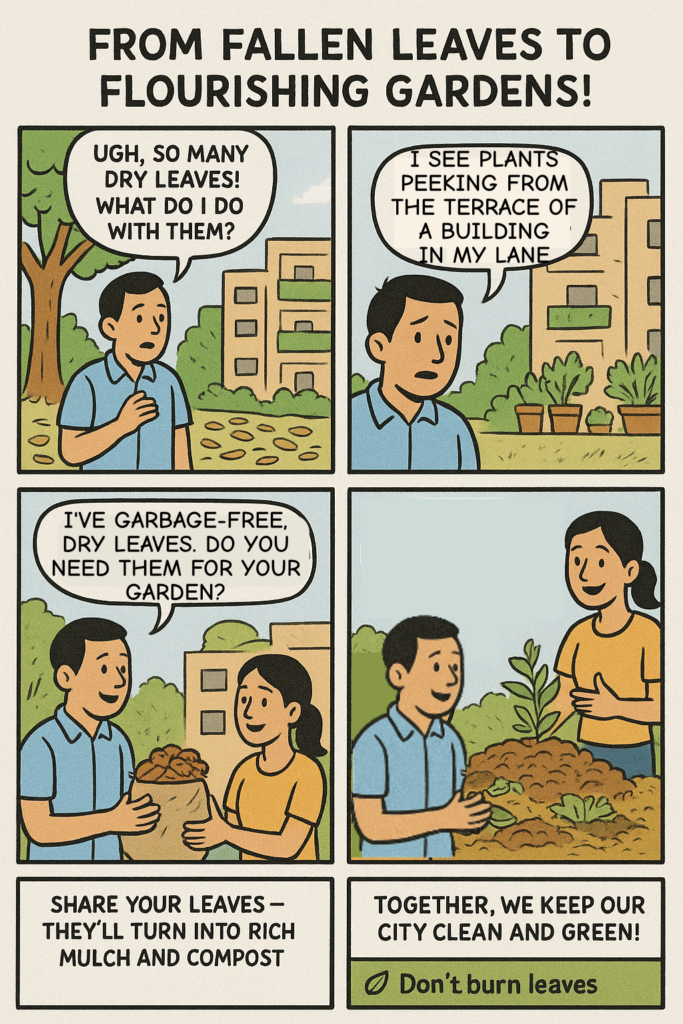
The Story of X and Y… and How a Simple Connection Stopped Leaf Burning
Meet X.
X lives in a housing society with many trees. During the leaf-fall season, huge piles of dry leaves accumulate.
Most of the compound is tiled or used for parking.
X does a bit of mulching in a small garden patch and has set up a mesh cage for composting. But beyond that, it’s impossible to manage the remaining leaves in their limited space.
The surplus leaves get burned. X hates this. He firmly believes the leaves should never be burned.
The society members say, “Tell us an alternative and we will stop burning.”
X had asked them for a week to find a solution. Today was the last day — and X still had no answer.
Burning leaves is illegal. X wondered, “Should I anonymously report this to the municipal corporation? They will fine the society…”
But then another thought:
Yes, the fine may stop burning for a few days. But it’s not a permanent solution.
And the real question — “What do we do with so many leaves?” — would still remain. A penalty is just a temporary band-aid, not a real fix.
Just then, X saw Y, a neighbour from the same lane.
Y was wearing rubber gloves, holding a small shovel, and collecting dry leaves lying along the roadside.
“What are you doing?” X asked with concern. “People spit there!”
Y laughed.
“That’s why I’m wearing gloves! Spitting is the least of it — people throw diapers, wrappers, all kinds of trash into these leaf piles.”
She pushed aside a gutkha packet to make her point.
From this cleaned leaf pile, Y filled a large sack she had brought with her.
“What do you do with all these leaves?” X asked.
Y explained: She maintains a terrace garden and needs at least four sacks of dry leaves every week. So she collects whatever clean leaves she can find from the roadside.
X almost had an “Eureka!” moment.
“Let us solve each other’s problem!” X exclaimed, “We have more leaves than we can use. You need leaves. We’ll give ours to you! We stop burning, and you receive clean, trash-free leaves.”
That day, everything changed. From then on, X added a third option to mulching and composting: ✨ Donation.
No more leaf burning.
And Y’s terrace garden started receiving a steady supply of clean dry leaves.
A perfect win-win —
🌱 For people
🌱 For the city
🌱 For nature
So here’s a thought:
Why not create a leaf-exchange system in your own neighbourhood?
Gardeners are everywhere. Look up — those terrace plants are your perfect “leaf-takers.”
Start a conversation. Offer your leaves. Terrace gardeners always need them.
This is exactly how we have prevented the burning of lakhs of gunny bags of dry leaves through ‘Brown Leaf‘
A simple act of connecting the dots, strengthened by the collaborative spirit of people who care.
Donation: Subscribe to the Paid Service for leaves and branches
‘क्ष’ आणि ‘य’ ची गोष्ट आपण बघितली. ‘क्ष’ च्या आवारातली mulching आणि composting करूनसुद्धा उरलेली पाने, त्यांनी ‘य’ ला दिली, त्यांच्या गच्चीवरच्या बागेसाठी.
हा एक उपाय आहे. आपल्या जवळचे leaf takers आपण शोधायचे किंवा त्यासाठी ब्राऊन लिफ फोरमची मदत घ्यायची. ही देवाण-घेवाण मोफत आहे.
पण.. आवाहन असे आहे की ‘पाने असणारे’ हे पाने हवी असणाऱ्यापेक्षा संख्येने जास्ती आहेत. शिवाय गच्चीवर बागकाम करणारे एकावेळी ३-४ पोती पानेच घेऊ शकतात, जागा आणि मनुष्यबळाची तेथे कमतरता आहे.
खूप मोठ्या प्रमाणावर पाने जिरवू शकणारे कोण आहेत? आणि त्यांच्यापर्यंत कसे पोहोचायचे?
त्याचे हे उत्तर Anil Gokarn च्या गोष्टीतून..
प्रोअर्थचा ओला कचरा खत प्रकल्प बाणेर रोडवरच्या एका मोठ्या सोसायटीत सुरू होता. वाळलेल्या पानांचे काय करायचे हा प्रश्न आला. पाने कचरा तर नाहीतच पण मोठे संसाधन आहे हे अनिलला माहीत होते. पाने जाळली जाऊ नयेत किंवा कुठेतरी फेकली जाऊ नयेत ही अनिलची इच्छा होती.
एखादी गोष्ट कचरा कधी ठरते जेव्हा तिचा कोणालाच उपयोग नसतो. पाने ज्यांच्यासाठी उपयुक्त आहेत असे लोक शोधले तर ही समस्या सुटेल. असे कोण आहेत जे मोठ्या प्रमाणावर पाने आणि झाडाच्या फांद्या वापरतात?
अनिल गोकर्ण, प्रोअर्थचा संस्थापक, स्वयंसेवक म्हणून वसुंधरा अभियान ह्या गटाबरोबर बाणेरच्या टेकडीवर काम करत होता. रुक्ष टेकडीवर झाडे लावून ती टेकडी हिरवी करायची, जैवविविधता वाढवायची, अधिवास निर्माण करायचे, भूजलपातळी वाढवायची आणि मातीची धूप कमी करायची असे महत्वाचे काम हा गट करतो.
रोपांच्या वाफ्यात वाळलेल्या पानांचे आच्छादन केले तर प्रखर सूर्यप्रकाश थेट मातीपर्यंत पोहोचत नाही. मातीत ओलावा टिकून राहतो. हा पानांचा थर कुजला की पोषणद्रव्ये जमिनीला मिळतात. Mulching मुळे रोपे तगतात आणि वाढतात.
लहान रोपं शेळ्या-मेढ्यानी फस्त करू नये ह्यासाठी त्यांच्याभोवती फांद्या वापरून पिंजरा म्हणजे tree guard करतात.
वाळलेली पाने आणि फांद्यांची मोठ्या प्रमाणात तेथे गरज आहे. सोसायटीतली पाने आणि फांद्या तेथे पोहोचवल्या तर? अनिलला ही कल्पना सुचली. समस्या होती की पाने गोळा करून टेकडीपर्यन्त आणणे खर्चिक आहे आणि स्वयंसेवी संस्थेच्या आवाक्यातले नाही.
2015 मध्ये अनिलने ही कल्पना अमलात आणली. विविध सोसायटयांतून पानांची पोती आणि फांद्या गोळा करून टेकडीवर पोहोचवणे. सोसायटीला पाने भरण्यासाठी पोती पुरवली जातात आणि पाने भरलेली पोती ही दर पोते काही दर आकारून घेतली जातात. जुन्या पोत्यांचा वापर ह्यासाठी केला जातो.
आता दर महिन्याला ६० ते ७० टेम्पोभरून पाने + फांद्या गोळा केल्या जातात. एवढी पाने जाळली गेली असती ती मातीत परत जात आहेत.
अर्थात हे सगळं सुरळीत होण्यासाठी खूप प्रयत्न करावे लागले आणि अजूनही अडचणी येतात. भरवशाची टेम्पो-सेवा मिळणे ही खूप मोठे आवाहन आहे. आता एवढ्या वर्षांनंतर एक टेम्पो ड्राइव्हर मिळाला आहे ज्याला ह्या कामाचं महत्व समजतं आणि केवळ प्रोअर्थसाठी त्याने काम करायचे ठरवले आहे. त्यामुळे वाहतुकीचा प्रश्न सुटला आहे.
वसुंधरा अभियान काम करत असलेल्या टेकडीवर कोणी समाजकंटकाने आग लावली. सगळं काम पूर्ववत व्हायला वेळ लागला. तेवढा काळ तेथे पाने पाठवणे शक्य नव्हते. तेव्हा अनिलच्या लक्षात आले केवळ एका संस्थेवर अवलंबून राहता येणार नाही. आज प्रोअर्थकहा हा प्रकल्प ५ ते ६ वेगवेगळ्या संस्थांबरोबर सुरू आहे.
X had more dry leaves than they could mulch or compost.
Y needed clean leaves every week for her terrace garden.
A simple exchange solved both problems. That is one solution.
You can find your own nearby “leaf takers,” or take the help of the Brown Leaf Forum. These exchanges are always free.
But here’s the challenge:
People who have leaves are far greater in number than those who need leaves.
And terrace gardeners can take only 3–4 bags at a time due to limited space and human-power.
So the question is: Who can use dry leaves at a large scale? And how do we reach them?
The answer lies in the story of Anil Gokarn
Anil was running ProEarth’s wet waste composting project in a large housing society on Baner Road. The problem of “what to do with dry leaves” came up.
Anil wanted to ensure that leaves were neither burned nor dumped. Waste is created only when something has no use for anyone. So Anil asked: Who needs large quantities of dry leaves and branches?
Anil, founder of ProEarth ZeroWaste, was also volunteering with the Vasundhara Abhiyan, which works on the Baner Hill.
Their mission:
- Green the barren hill
- Increase biodiversity
- Create habitats
- Improve groundwater levels
- Reduce soil erosion
Dry leaves could help them in many ways. A layer of leaves over saplings protects the soil from harsh sunlight, keeps moisture intact, and enriches the soil as the leaves decompose.
Branches can be used to make protective tree guards so goats and cattle do not eat the new saplings.
Naturally, Vasundhara Abhiyan needed large quantities of leaves and branches. And that gave Anil an idea: What if housing societies supplied their dry leaves and branches to the hill?
There was a challenge — collecting and transporting leaves up the hill was expensive and beyond the capacity of a volunteer group.
In 2015, Anil put the idea into action. Societies were given old gunny bags to fill their leaves. ProEarth arranged for collection and transportation, and societies paid a small per-bag fee to cover costs.
Today, 60–70 tempo-loads of leaves and branches are collected every month.
All those leaves, which would have been burned, now go back to the soil.
It wasn’t easy.
There were challenges — especially finding a reliable tempo service. After many years, ProEarth finally found a driver who truly understands the value of this work and now works exclusively for them. Transportation is no longer a bottleneck.
There was another setback: Someone set fire to the hill where Vasundhara Abhiyan worked. Restoration took time, and leaf deliveries stopped for months. That’s when Anil realized something important: We cannot depend on a single partner. Today, this leaf cycle project runs with five to six different organizations, ensuring continuity and long-term impact.
Contact ProEarth +91 8007011414
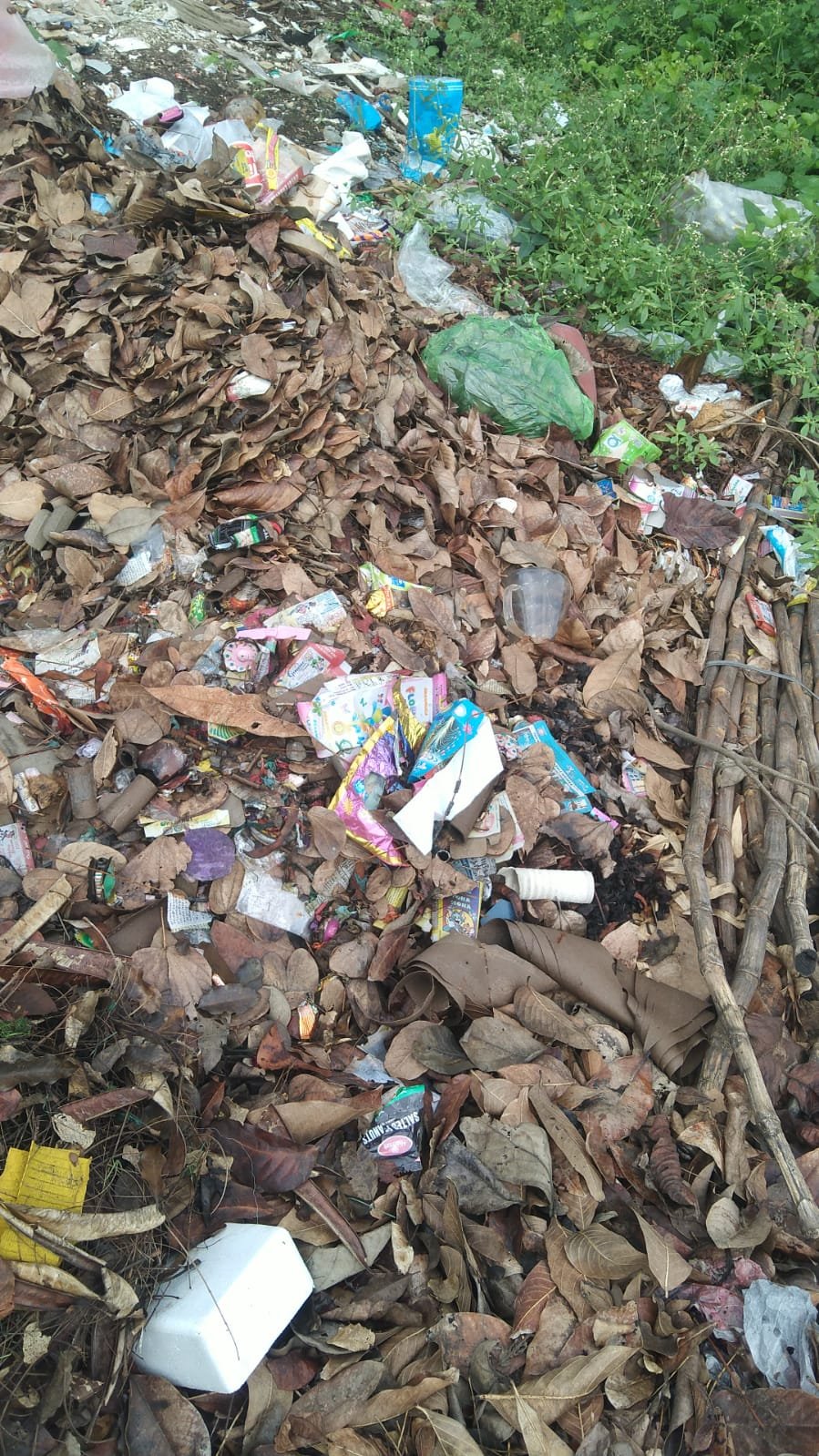
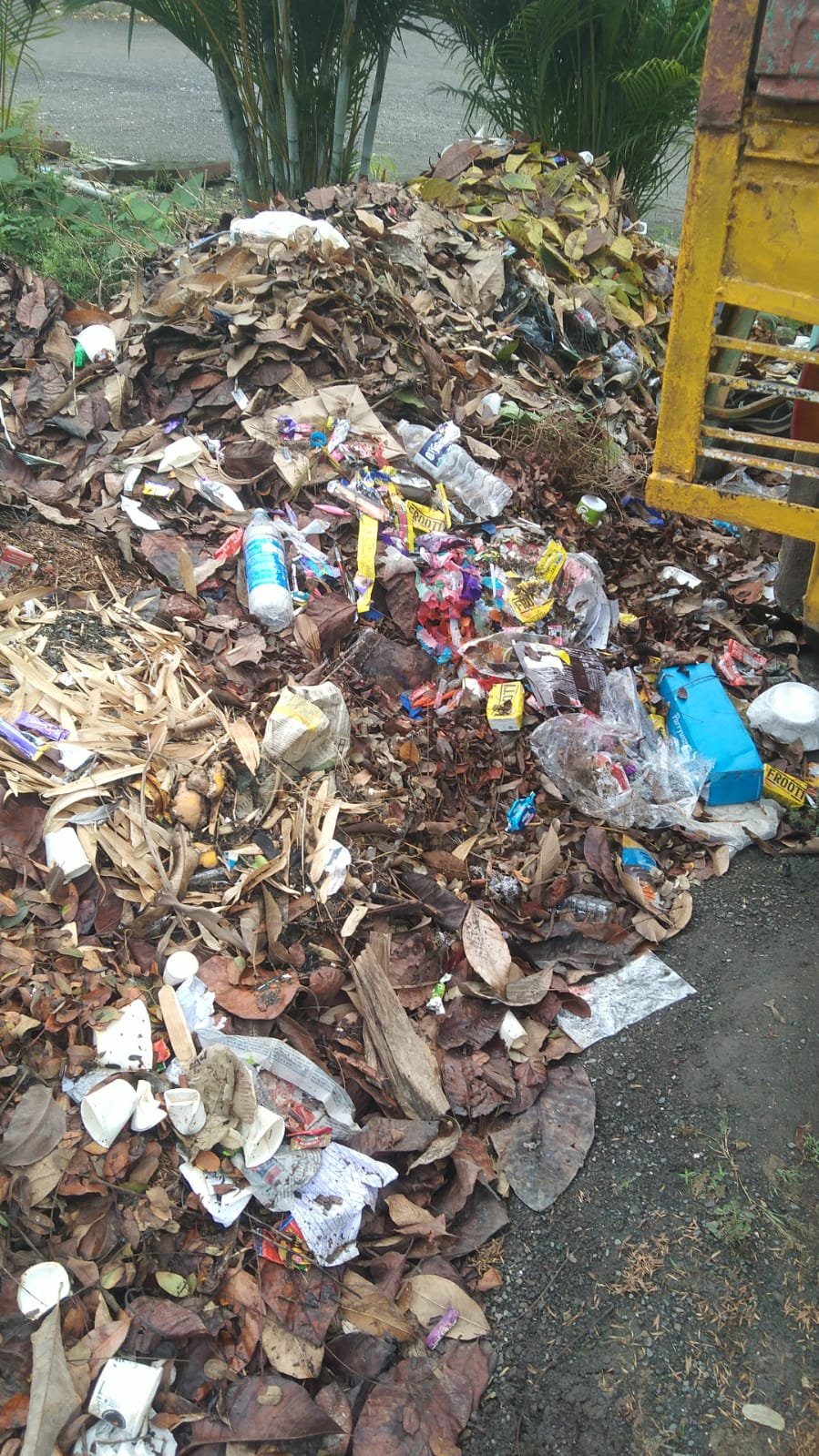
Guidelines for Garden Waste Donation
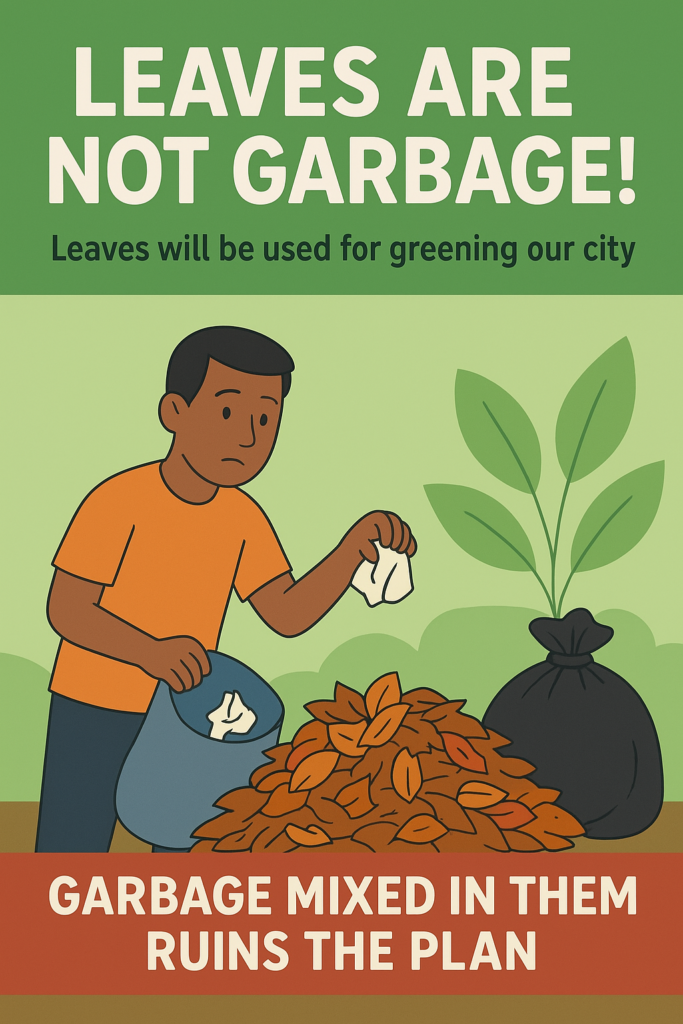
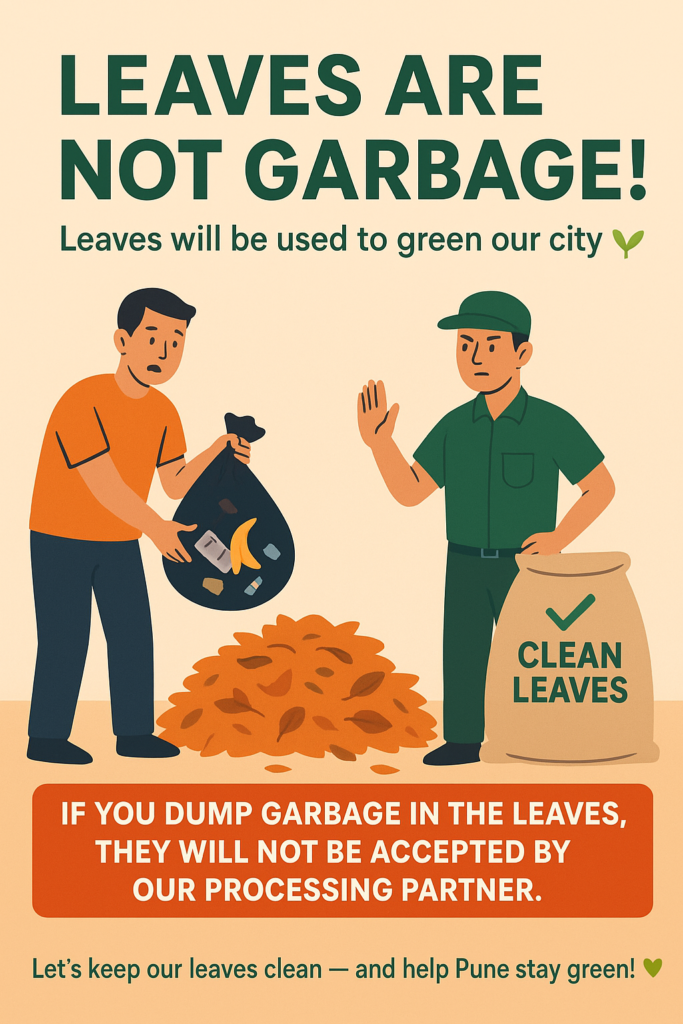
Please make sure the leaves are ‘garbage-free’.
- Green leaves mixed with dry leaves is fine
- Twigs, dried flowers, pods, fruits mixed with leaves is fine.
- Strictly NO GARBAGE
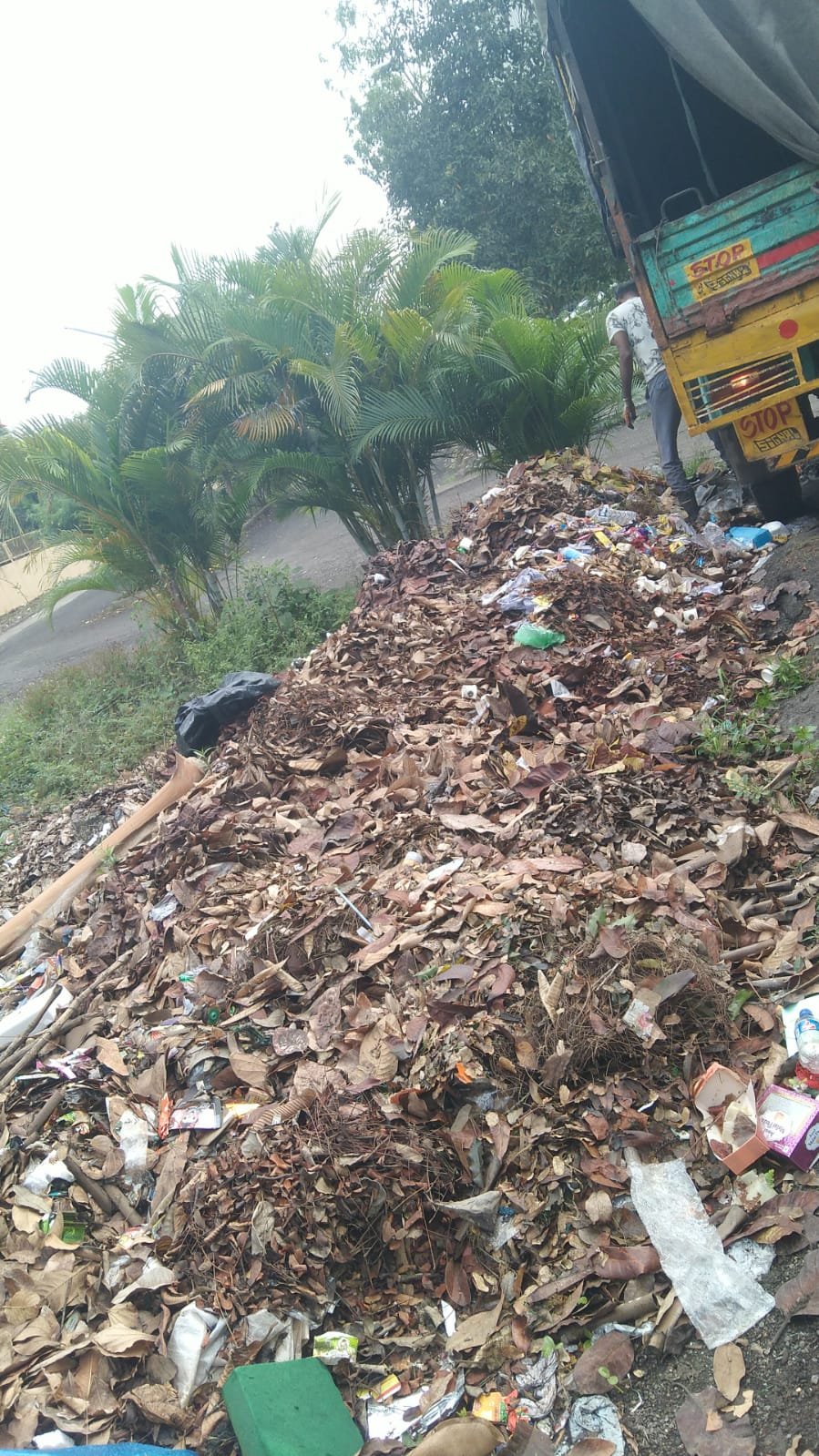
Collect leaves in the gunny bags and keep ready for the pick-up