A Compact Guide on How to Compost Dry Leaves
आपल्या आवारात पाने जिरवायचा दुसरा पर्याय – कंपोस्टिंग!
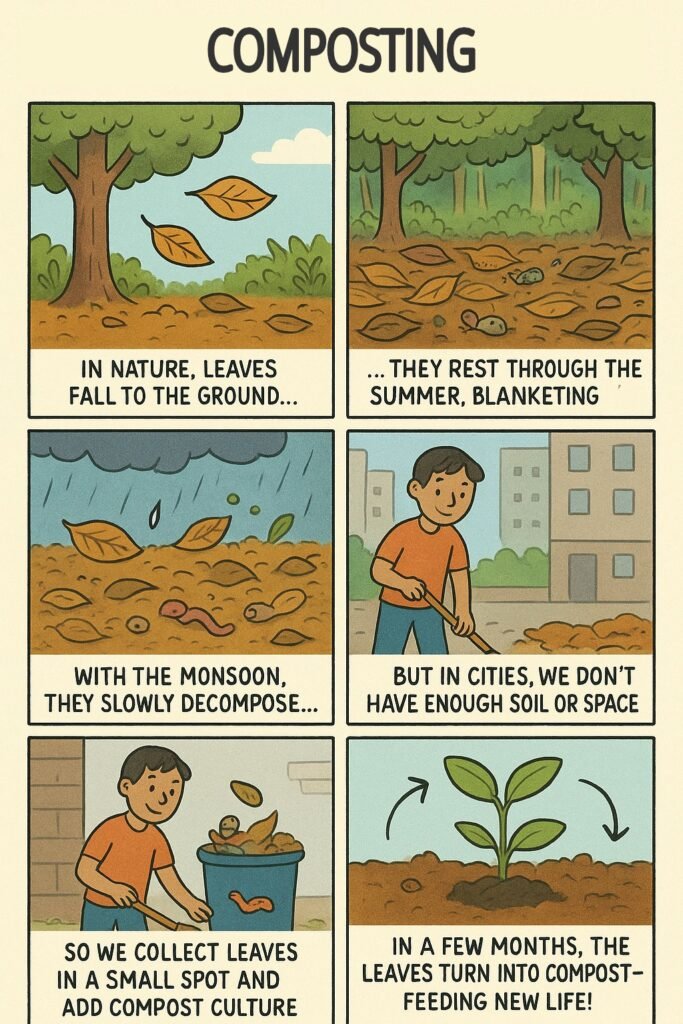
निसर्गात काय होतं? झाडांची पानं गळतात, कुजतात आणि परत मातीत मिसळतात.
शहरात आपण हीच प्रक्रिया थोड्या वेगळ्या प्रकारे करतो.
जिथे विशेष वर्दळ नाही असा, पाण्याचा स्रोत जवळ असलेला आवारातळा कोपरा निवडायचा,
आवारातली गळलेली पाने, काड्या, शेंगा, फुले आणि फळे तिथे जमा करायची.
एकावर एक थर करत जायचे.
थोडं पाणी, थोडं मायक्रोब्सचं कल्चर — आणि साधारण दोन महिन्यांनी तयार होते कॉम्पोस्ट
कंपोस्टिंग आपण सुरू करू शकत नाही, थांबवूही शकत नाही — ही एक नैसर्गिक प्रक्रिया आहे.
फक्त ती घडण्यासाठी आपण पोषक परिस्थिती निर्माण करतो आणि तिची गती थोडी वाढवतो.
मल्चिंगसोबतच कंपोस्टिंग ही पानं व्यवस्थापनाची उत्तम पद्धत आहे — जाळणं आणि डंपिंग टाळण्यासाठी, आणि निसर्गाचा वर्तुळ पुन्हा पूर्ण करण्यासाठी.
पुढच्या दोन पोस्टमध्ये आपण कंपोस्टिंगचं “ATM” आणि कंपोस्ट कल्चर याबद्दल सविस्तर बोलणार आहोत.
Composting: The Second Step to Close the Loop
The second way to complete nature’s circle is through composting.
It’s what nature does effortlessly—leaves fall, decompose, and return to the soil.
In cities, we simply recreate this process a little differently.
We choose a quiet corner on the premises, preferably near a water source, and start collecting fallen leaves, twigs, pods, flowers, and fruits. Layer by layer, they form a compost pile.
With regular watering and the help of microbial culture, nature’s own process is simply sped up.
In about two months, the compost is ready—rich, earthy, and alive.
We can’t start composting, nor can we stop it—it’s a natural process that only needs the right conditions to thrive.
Together with mulching, composting helps us manage dry leaves right where they fall, closing the loop and preventing burning or dumping.
In the next two posts, we’ll explore the “ATM” of composting and compost culture.
Composting is not much different from Making Curd
composting बद्दल भीती, साशंकता खूप आहे. composting बद्दल त्यामुळे आपण सविस्तर बोलू.
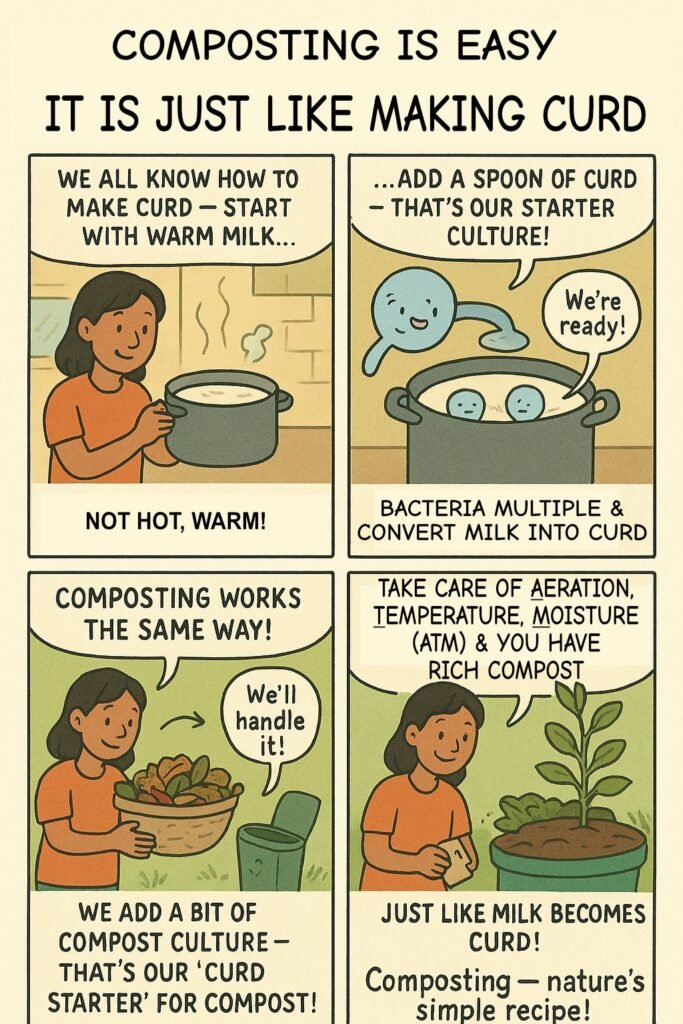
कोंपोस्टिंग ही प्रक्रिया ‘दही तयार करणे’ ह्या प्रक्रियेपेक्षा फार वेगळी नाही.
दही कसे करतो? एका भांड्यात कोमट दूध घ्यायचे, त्यात अर्धा चमचा विरजण म्हणजे दही घालायचे, आणि? बस्स !!! आपलं काम झालं. काही तासांनंतर दही तयार.
आपण जे विरजण घालतो, त्यात म्हणजे दहयात बॅक्टेरिया असतात. ते वाढत जातात आणि दुधाचे दहयात रूपांतर करतात.
आपण काय केलं? खरंतर काहीच नाही. सगळं काम बॅक्टेरियांनी केलं. आपण फक्त त्यांना वाढायला पोषक वातावरण निर्माण केलं, म्हणजे दुधाचे तापमान. दूध अगदी थंडगार नाही किंवा अगदी उकळतं नाही, तर कोमट. बस्स!! आपलं काम एवढंच.
कोंपोस्टिंगमध्ये तसंच आहे. सगळं काम आपले decomposers करणार आहेत. त्यांना पोषक वातावरण निर्माण करणे एवढेच काय ते आपले काम.
एकदा ते केलं की झालं. कोंपोस्टिंगसाठी पोषक वातावरण काय? त्यासाठीचे ‘विरजण’ म्हणजे काय, ते कुठे मिळते हे आपण पुढच्या दोन पोस्टमध्ये
सविस्तर बघू.
आणि महत्वाचे म्हणजे आपल्या decomposers शी ओळख करून घेऊ. ह्यातले बरेचसे decomposers आपल्याला डोळ्यांना दिसतच नाहीत. जे दिसतात ते आपल्या ‘सौंदर्याच्या’ व्याखेत बसत नाहीत. त्यामुळे हे decomposers दिसले की लोक अस्वस्थ व्हायला लागतात. composting नकोसे वाटणे ह्याचे हे एक मुख्य कारण आहे.
आपला त्यांच्याकडे बघायचा दृष्टिकोन बदलायचा असेल तर त्याबद्दल सविस्तर चर्चा करू. त्यासाठी पुढची तिसरी, शेवटची सविस्तर पोस्ट. मग ‘donation’ ह्या तिसऱ्या पर्यायाबद्दल बोलू.
Let’s talk about Composting
There’s a lot of fear and hesitation around composting. So let’s take a closer look and demystify it.
Composting is not very different from making curd (yogurt) at home.
Think about how we make curd — You take some warm milk in a bowl, add half a spoon of curd as a starter, and… that’s it! Your job is done. In a few hours, the milk turns into curd.
What actually happens? The bacteria in that small spoon of curd multiply and transform the milk into curd.
Did we really do anything? Not much. All the work was done by the bacteria.
We simply created the right environment for them — milk at the right temperature. Not too cold, not boiling hot — just warm enough. That’s all!
Composting works exactly the same way.
The real work is done by the decomposers — the tiny organisms that break down organic matter. Our only role is to create a suitable environment for them to thrive.
Once we do that, the process takes care of itself.
In the next two posts, we’ll look at —
👉 What kind of environment composting needs
👉 What acts as the ‘starter culture’ for composting
👉 And how to easily get started
Most importantly, we’ll meet our decomposer friends. Many of them are invisible to the naked eye, and the ones we can see don’t always fit into our idea of “beauty.”
That’s one of the main reasons people find composting unpleasant — it challenges our sense of cleanliness and beauty.
In the third and final part of this series, we’ll talk about changing this perspective — seeing decomposers as allies, not enemies.
And finally, we’ll discuss the third option — ‘donation’ — as a way forward.
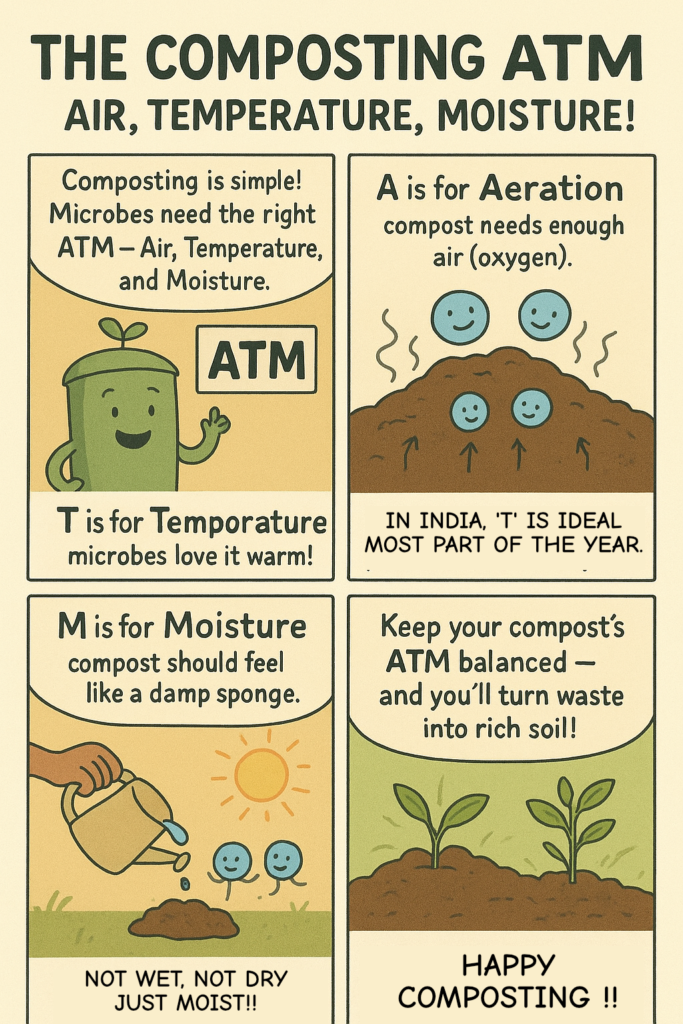
Composting ATM
दही लागण्यासाठी जसे दूध कोमट असावे लागते म्हणजे Temperature महत्वाचे आहे तसे कोंपोस्टिंगसाठी ह्या तीन गोष्टींची काळजी घेतली पाहिजे – Aeration, Temperature आणि Moisture, लक्षात ठेवायला सोपे म्हणजे ATM.
aeration म्हणजे ऑक्सीजन पाहिजे. ऑक्सीजन मिळाला नाही तर जविक घटक कुजत नाहीत सडतात. anaerobic digestion ही नैसर्गिक प्रक्रियाच आहे. ऑक्सीजनच्या सानिध्यात जेव्हा जैविक घटकांचे विघटन होते तेव्हा कार्बन डायऑक्साइड तयार होतो. ऑक्सीजन जेव्हा मिळत नाही तेव्हा मिथेन आणि हायड्रोजन सल्फाईड तयार होतो. हायड्रोजन सल्फाईडला अत्यंत घाणेरडा वास असतो.
कोंपोस्टिंग बिनमध्ये पाणी साचले तर प्रक्रिया anaerobic होते कारण पाण्याने सर्व पोकळ्या भरून जातात आणि हवेला जागा रहात नाही.
काही वेळा ओल्या कचऱ्यात पालेभाज्या खूप असतील तरी हे होऊ शकते.
घाण वास यायला लागला की कोंपोस्टिंग प्रकल्प बंद पडतात. Aeration सांभाळले की झाले. त्यासाठी आपण by design काही गोष्टी करू शकतो ते म्हणजे कोंपोस्टिंग प्रकल्प मातीमध्ये उभारणे म्हणजे अतिरिक्त पाणी शोषले जाते. composter / enclosure जाळीचे करणे ज्यामुळे पाणी साठणारच नाही.
Temperature साठी आपल्याला म्हणजे इथे महाराष्ट्रात काहीच विशेष करायला लागत नाही, ते सूक्ष्मजीवांच्या वाढीसाठी पोषक असेच असते.
तिसरा घटक आहे moisture म्हणजे ओलावा. तो आपल्याला सांभाळावा लागतो. आपल्या बागेला पाणी देतो तसे ह्या कोंपोस्टिंगचा ढीग/ पिंजरा, त्यालाही पाणी द्यायचे.
पाण्याची कमतरता असेल तेव्हा पाणी नाही दिले तरी हरकत नाही. प्रक्रिया थोडी मंदावते एवढेच.
त्यामुळे सगळ्यात जास्ती काळजी घ्यायची ती Aeration ची. मुख्य कष्टाचे काम आपले decomposers करणार आहेत, आपले काम फक्त त्यांना पोषक वातावरण निर्माण करून देणे एवढेच.
Just as milk needs to be warm for curd to set — temperature is key — composting too depends on three vital factors: Aeration, Temperature, and Moisture.
An easy way to remember them? Think ATM.
A for Aeration:
Composting needs oxygen. Without it, organic matter doesn’t decompose — it rots.
When oxygen is present, microbes break down waste and release carbon dioxide.
Without oxygen, the process turns anaerobic, producing methane and hydrogen sulfide — the latter being responsible for that unpleasant “rotten” smell.
If water collects in your compost bin, air pockets disappear, and the process turns anaerobic. This can also happen if there are too many leafy veggies in the kitchen waste.
Bad odour is often the first sign that aeration has been compromised. The majority of composting projects fail due to this. Foul odor is what scares people about composting.
To fix it by design:
Build composting setups on soil, so excess water is absorbed. Use mesh or perforated enclosures to prevent waterlogging and allow air flow.
T for Temperature:
In Maharashtra’s climate, temperature usually stays in the ideal range for microbes to thrive — nature helps us here!
M for Moisture:
Moisture needs to be balanced — not too wet, not too dry.
Just as we water our plants, the compost pile or bin also needs moisture.
If you skip watering occasionally, it’s fine — the process will just slow down a bit.
So, the one thing you must always ensure is good aeration.
Let the decomposers do their job — our role is simply to create the right environment for them.
About Compost Culture
Composting हे दही लावण्यापेक्षा फारसे वेगळे नाही हे आपण बघितलं.
दहयाला विरजण लागते तसे कोंपोस्टिंगसाठी काय?
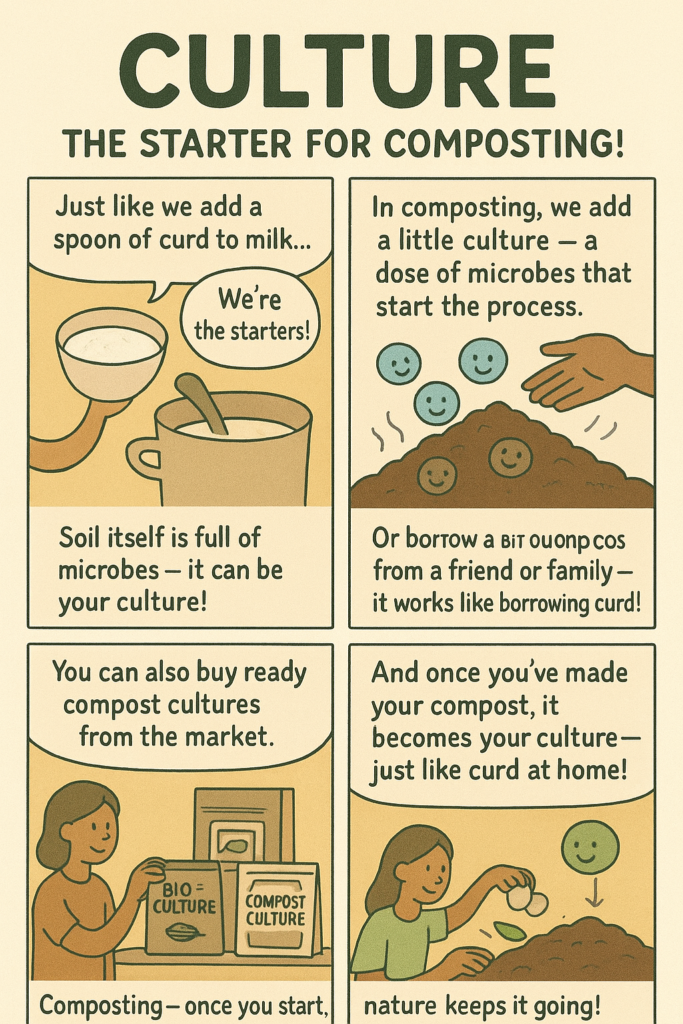
कोंपोस्टिंगसाठी विरजण म्हणजे composting culture. कुजण्याची प्रक्रिया लवकर व्हावी म्हणून आपण सूक्ष्म जीवांचा एक डोस देणार आहोत.
त्यासाठी काय काय वापरता येईल? माती ही स्वतः कल्चर आहे कारण मातीत अनेक सूक्ष्म जीव असतात.
लहानपणी खेळताना आपण पडलो की सगळे सांगायचे ना, जखम पाण्याने धुवा, माती नाही ना राहिली? त्याचे हेच कारण होते.
पण माती कशी घ्यायची? एखाद्या छान डेरेदार झाडाखालची माती!!! जी माती सतत उन्हात असते ती कडक होऊन जाते. तिच्यात कुठलेही जीव-जंतू जिवंत रहात नाहीत.
भुसभुशीत, ओलसर माती आपल्याला कल्चर म्हणून हवी आहे.
दुसरा पर्याय आहे, आपल्या आजूबाजूला राहणाऱ्या लोकांत कोणी कोंपोस्टिंग करत असेल तर त्यांचे तयार कॉम्पोस्ट कल्चर म्हणून वापरता येईल. पूर्वी नाही का आपण शेजारून विरजण आणायचो, अगदी तसेच!!
प्रयोग म्हणून छोट्या प्रमाणात कोंपोस्टिंग करत असाल तर घरातले ताकही वापरता येईल. जेवणानंतर वाटीभर ताक आपण पितो ते ह्यामुळेच, ताकात बॅक्टेरिया असतात. पण सुरुवातीलाच. एरवी ताक मातीपेक्षा पोटात गेलेले चांगले 🙂
ह्यातला कुठलाच पर्याय सोयीचा नसेल तर मग बाजारात तयार कल्चर मिळतात.
We saw that composting is not very different from setting curd.
Just like curd needs a starter culture, what does composting need?
For composting, the “starter” is called composting culture. To speed up the decomposition process, we add a dose of beneficial microorganisms.
So what can we use for this?
Soil itself is a culture, because it already contains many microorganisms.
Remember when we were children and fell while playing? Adults would say, “Wash the wound with water — make sure there’s no soil left.” That was exactly the reason — soil is full of microbes.
But what kind of soil should we use?
Soil from under a big, healthy tree!
Soil that is constantly exposed to harsh sunlight becomes hard and lifeless; very few organisms survive there.
What we need as culture is loose, moist soil.
Another option is to use compost from someone who is already composting nearby. Just like we used to borrow a spoonful of curd from a neighbour as a starter, this works the same way!
If you are experimenting with composting on a small scale, you can also use buttermilk. We drink a small bowl of buttermilk after meals for the same reason — it contains bacteria. But ideally only in the beginning; otherwise, buttermilk is better in your stomach than in compost 🙂
If none of these options are convenient, ready-made cultures are also available in the market.